
Weird Modernisms
BAMS/MSA joint conference 2026

Thrilled to share that my paper, “Exploring the Parafloral: Mediumship and Plant-Human Entanglement,” has been accepted for The British Association for Modernist Studies / Modernist Studies Association joint Annual Conference 2026, taking place July 1-4 in Loughborough, UK!
I’m humbled to present alongside such provocative scholars as Dr Catriona McAra, author of The Medium of Leonora Carrington: A Feminist Haunting in the Contemporary Arts; Dr Nisha Ramayya, author of Fantasia; and Dr Alison Sperling, author of “Weird Queer Ecologies” in The Weird: A Companion and currently completing a monograph titled Weird Modernism.
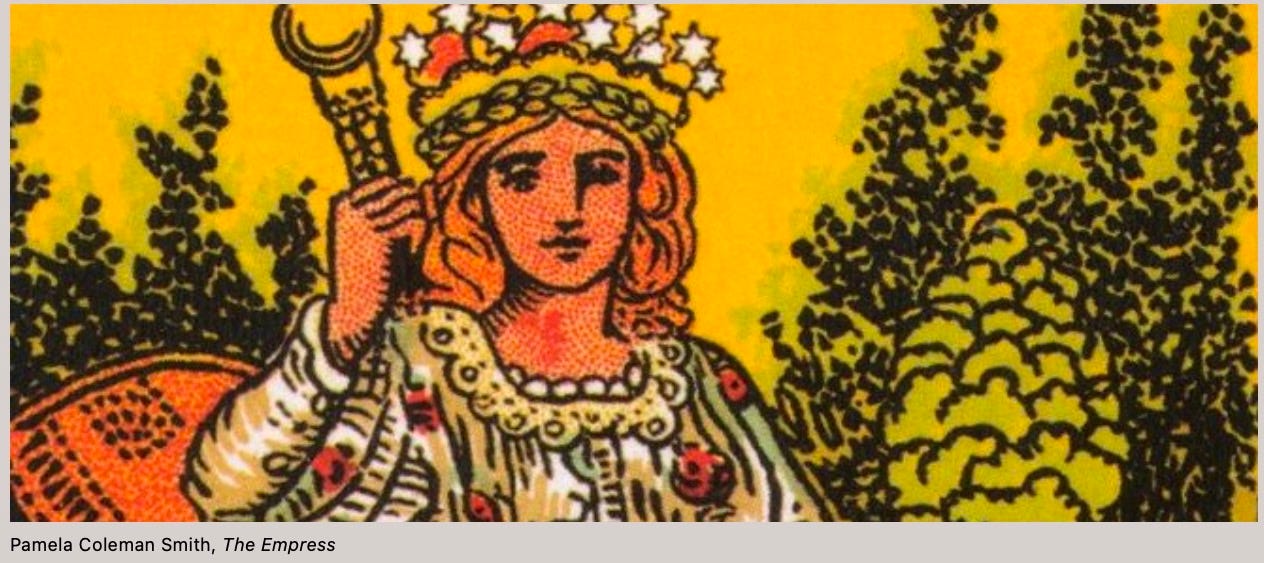
This year’s MSA and BAMS topic is Weird Modernisms. The conference celebrates Modernism as strange, queer, uncanny, occult, and above all, WEIRD. Since the foundational work of Viktor Shklovsky, Modernism has been aligned with the idea of ‘making strange’. Following Shklovsky, this has usually been understood as a creative act of defamiliarization, the work of presenting the taken-for-granted with new and puzzling perspectives.
The MSA and BAMS joint conference takes this heritage and refracts it to consider the concept of Weird Modernism in a multi-faceted and interdisciplinary context. Whether as genre in its own right or a lens to highlight non-normative experience, the weird both encourages alternative ways of thinking about the form, style and ethics of Modernist cultural production and typifies the encounter with Modernism’s experimental modes.
Abstract: “Exploring the Parafloral: Mediumship and Plant-Human Entanglement”
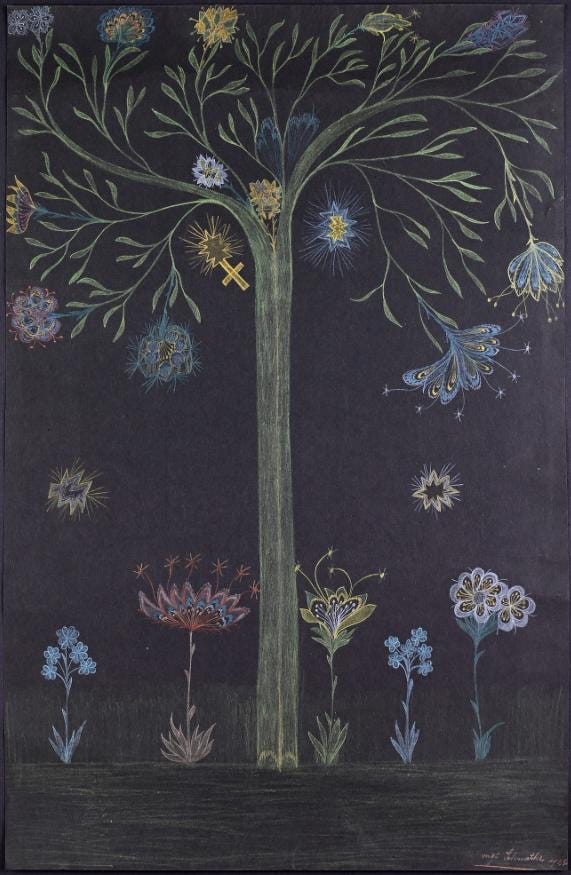
The art world has taken an interest in plant-human entanglement in recent years, reflected in the exhibitions The Botanical Mind, Floral Fantasies, and Hilma af Klint: What Stands Behind the Flowers. Yet, art historical scholarship rarely explores the ecological connections among spiritualism, vegetal life, mediumship, and the animate natural world. This omission is especially striking in the context of the visual and material culture of spiritualism, a movement that emerged in the mid-nineteenth century and asserted a spirit world alongside our reality. My research, which I call parafloral, examines the symbiosis among plants, spirits, and mediums, suggesting that plants were central, not peripheral, to spiritualist practice.
This paper highlights a novel, ecocritical direction for the historical study of mediumistic practice through analysis of automatic and spirit drawings, as well as first-person accounts of mediumistic practice. This study deconstructs the human-centered interpretation of plants by examining how vegetal and spirit life intertwine through a phenomenological lens. I ask: What if automatic drawings are not simply reflections of a medium’s subconscious, but co-productions, traces of contact among human, plant, and spirit? This approach allows us to interrogate not only what these images mean, but what they do. I contend that they enact forms of relation, perception, and co-presence that challenge boundaries between material and immaterial, self and other, life and afterlife. This interpretation situates plants as agents, collaborators, and messengers in a cosmology that refuses to segregate nature from spirit.